Why So Many Houston Pools Sit Empty in July, and How to Design One That Doesn't
The gorgeous pool that nobody swims in is a Houston specialty. Here is what separates a backyard people actually use from an expensive water feature.
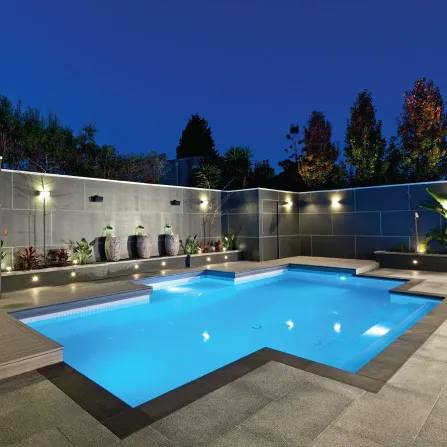
Walk through a few Houston neighborhoods on a Saturday in late July and count the backyards with a pool. Then count the ones with anybody in them. The gap is enormous, and it is not because those families stopped liking the idea of swimming. It is because at four in the afternoon the deck is too hot to cross, there is no shade within twenty feet of the water, the pool itself is running warmer than a bath, and the mosquitoes have already claimed the yard.
A pool in this city is not a summer amenity by default. It becomes one through a series of unglamorous design decisions that rarely show up in a rendering: what the deck is made of, where the shade goes, how the water sheds heat, how the yard drains, and what happens after sunset. Get those right and the backyard runs from March through October. Get them wrong and you own a beautiful blue rectangle that gets used in May and then abandoned.
The Real Villain Is the Deck, Not the Air
Air temperature is the number everyone quotes, but it is not what drives people back inside. Surface temperature is. Dark, dense hardscape sitting in full Houston sun can climb dozens of degrees above the ambient air, easily hot enough to make a barefoot walk to the steps genuinely painful. Kids figure this out immediately and then simply stop going outside.
Material choice is the single highest impact decision available, and it costs nothing extra to make it thoughtfully at the design stage. Lighter colors reflect more. Porous materials shed heat faster. Texture affects both grip and comfort.
- Light travertine and shell stone stay dramatically cooler underfoot than dark pavers or stained concrete.
- Modern cool deck coatings are engineered specifically for this problem and are worth pricing out.
- Large format light concrete pavers with open joints drain fast and stay more comfortable than a solid dark slab.
- Dark stone and dark stamped concrete look spectacular in photographs taken in November and punish you in August.
- Wood and composite decking near the water require their own moisture conversation in this humidity.
The deck is also the largest surface in the whole project. It sets the temperature of the space more than the water does, and it is the thing people are standing on when they decide whether to stay outside.
Shade Is Architecture Here, Not an Accessory
In milder climates shade is a nice touch. On the Gulf Coast it is the difference between a usable backyard and a decorative one. The mistake is treating it as something to add later with a patio umbrella from a big box store. Shade needs to be in the plan on day one, because its position depends on the sun path across your specific lot and on where people will actually want to sit.
Built structures do the heavy lifting
A covered outdoor room adjacent to the water changes the entire dynamic of a backyard. It gives adults somewhere to be while kids swim, it protects furniture from both sun and sudden downpours, and it extends the season on both ends of the year. Louvered pergolas that adjust through the day have become popular here for good reason, because the sun angle in June is nothing like the sun angle in October.
Placement beats size. A modest covered area on the west side of a pool, blocking that punishing late afternoon sun, does more for comfort than a much larger structure sitting in the wrong spot. This is worth modeling before anything is poured.
Planting is slower but it does not draw a permit
Trees take years, which is exactly why they should go in during construction rather than after. Native and adapted species handle the heat, the humidity, and the occasional hard freeze better than anything trucked in from a different climate. Live oaks, cedar elms, and Mexican sycamores all earn their space. Just keep the root zones and the leaf drop in mind relative to the water, because nobody enjoys skimming a pool that sits directly under a heavy canopy.
Water That Is Not Warm Bathwater by Mid Summer
This surprises people who have moved here from cooler states. In a Houston August a pool sitting in full sun can hold water in the high eighties or above, which stops feeling refreshing and starts feeling like a very large soup bowl. Swimming stops being a relief from the heat, so people stop swimming.
There are real answers, and they belong in the design conversation rather than in a panicked search the following July. Shade over part of the water helps. So does depth, since a deeper pool holds a larger volume that resists temperature swings. Water features that move and aerate the water provide meaningful evaporative cooling, and a fountain or spillway running overnight can pull the temperature down noticeably by morning. For homeowners who want the season fully under control, a heat pump that reverses into chiller mode is the direct solution, and it doubles as a way to extend swimming into November.
The point is that water temperature is a design variable, not a fixed condition. Almost nobody thinks about it before the build, and quite a few homeowners think about nothing else by the second summer.
The Mosquito Problem Nobody Puts in the Rendering
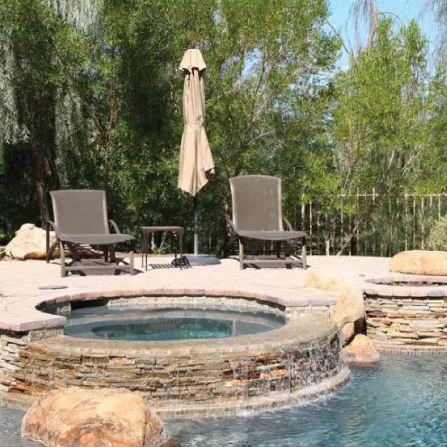
Houston is consistently near the top of every worst mosquito city ranking in the country, and a backyard renovation can quietly make the situation better or considerably worse. The insects do not breed in a chlorinated, circulating pool. They breed in everything around it, and a construction project creates a surprising amount of everything around it.
- Low spots in new grading that hold water for more than a few days become breeding sites.
- Decorative containers, saucers, and unsealed drainage boxes are the usual culprits after a project wraps.
- Dense low planting right against seating areas traps humidity and gives mosquitoes somewhere to rest.
- Moving water helps, still water does not, which is another argument for a spillway or bubbler.
- Ceiling fans in covered areas are surprisingly effective, because mosquitoes are terrible in moving air.
Handled at design time this is mostly a drainage and airflow question, and it costs very little. Handled afterward it becomes a recurring service bill.
Lighting Turns One Season Into Three
The most underused fix for Houston heat is simply moving backyard life to the other end of the day. From June through September the best hours are after seven in the evening, when the deck has cooled, the sun is off the water, and the humidity finally breaks. A backyard that is lit properly is available for those hours. A backyard with a single floodlight over the back door is not.
Good lighting here is layered and low. Warm color temperature in the water, subtle grazing light on stone and planting, path lighting that keeps people from finding the step edge with their toes, and dimmer control over all of it. Modern color changing systems are fun for a party, but the everyday setting most homeowners land on is a warm, quiet, restaurant patio kind of glow. Design for that and the pool stops being a daytime object.
Do not forget the trip back inside
Wet feet, dark thresholds, and a step nobody can see cause more backyard injuries than the water does. Lighting the transitions between deck, lawn, and house is unglamorous and matters enormously.
One more thing worth budgeting for
Outdoor fans, misting lines, and a shaded spot to put a drink down are the small items that get cut first when a budget tightens, and they are also the items homeowners bring up most often a year later. If something has to go, cut a decorative feature before you cut comfort. Nobody has ever regretted the ceiling fan.
A Backyard That Earns Its Keep in the Worst Month of the Year
Every one of these decisions is cheap or free while a project is still on paper and expensive or impossible after the concrete cures. Deck material, shade placement, water depth and aeration, grading and drainage, lighting layout. None of them are luxury upgrades. They are the difference between a pool that gets used constantly and one that becomes a very costly thing to look at through the kitchen window.
The right test for any Houston pool design is not whether it looks good in a rendering with a perfect blue sky. It is whether you can picture your family out there at four in the afternoon on the hottest day of the year, comfortable, in the shade, on a deck that does not burn, in water that still feels like a relief. Design toward that specific moment and the rest of the year takes care of itself.
Let's talk about your backyard
Every lot in this city argues differently. Have us walk yours, and we will tell you honestly what it will and will not allow before you commit to anything.